To Watch Summer


Summer is the season when everything grows at full speed. To watch it, you have to stop. The Chinese name, guān xià, means to watch summer.
Li Shen, a former fashion magazine editor, and Elvis Liu started To Summer in Beijing in May 2018. They built it on an old Chinese idea, the beauty of useless things. A scent does no work. It only makes a room, a walk or a morning feel like your own.

In the old gardens of Jiangnan, south of the Yangtze, the walls have windows with eight sides. Through each one you see a single framed part of the garden, a rock or a branch or a pool.
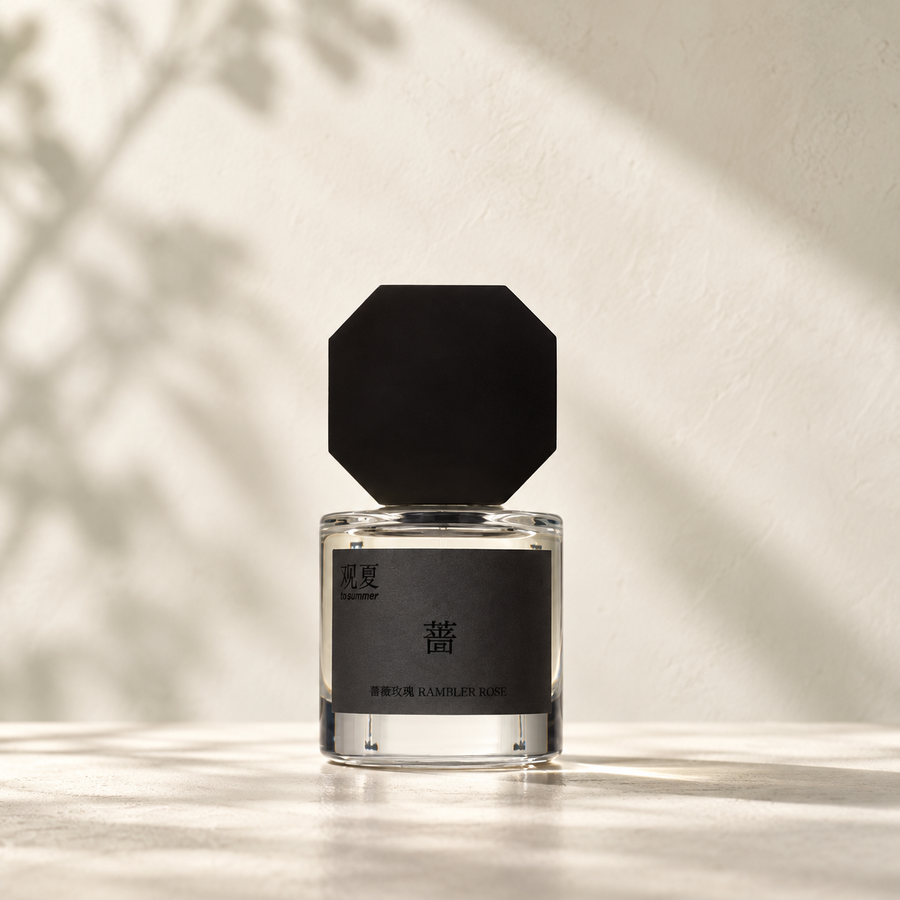
To Summer made that window into its cap. Each one is octagonal, cut to feel like jade and heavy in the hand. The bottle becomes a small garden that you can carry.

Chinese gardens are made of rock and water. The solid perfume case has the shape of a pond when wind moves across it. It opens with one smooth turn, and the character for each scent is engraved in the balm.
Inside is 20% perfume in a base of more than 95% organic plant oils and waxes, with no alcohol.

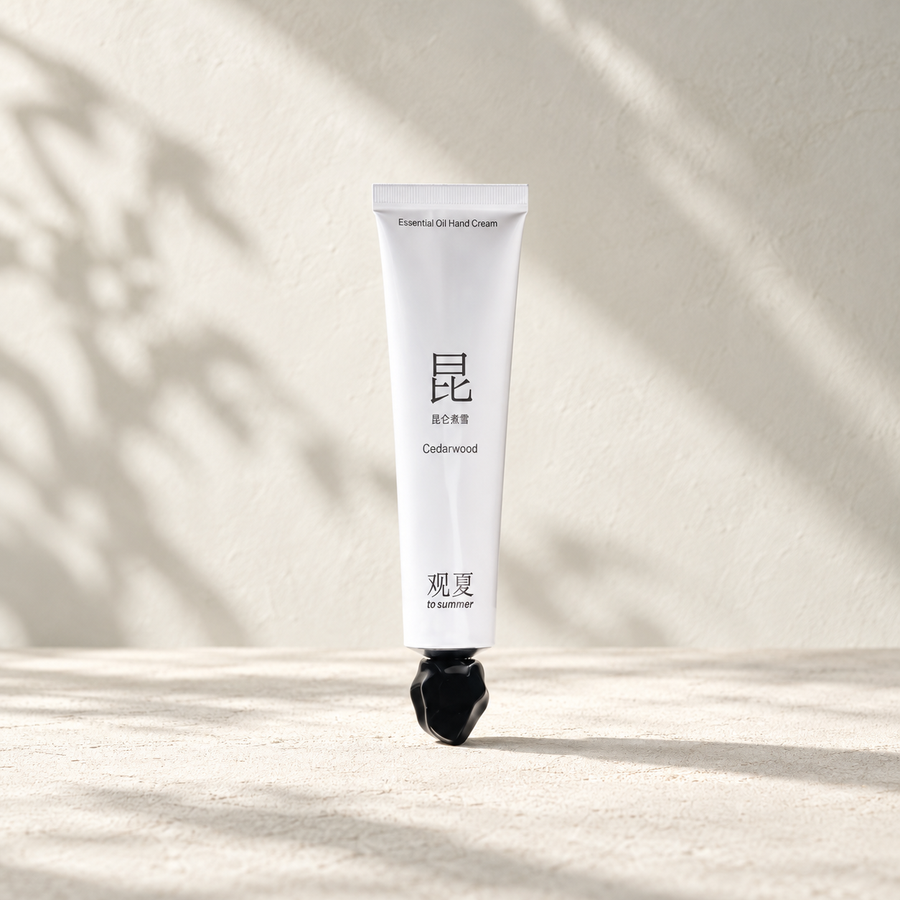
Kunlun is China's sacred mountain, high in the far west. Kunlun Snow began as a picture of a cabin at its foot, with pine burning inside and wind and snow outside.
Perfumer David Huang built it on Chinese cedar, juniper and cypress. Wide open, and warm at the same time.

The candle cups follow Ding ware, the white porcelain of the Song dynasty. The diffuser caps are made partly by hand in Jingdezhen, the city that has fired China's porcelain for centuries. The candles burn rapeseed wax on an oak wick that crackles softly.
The stores are old buildings, restored, in Shanghai, Beijing, Chengdu and Guangzhou, and a 1958 shophouse on Yun Ping Road in Hong Kong.

To Summer works with plants that grow in China. Osmanthus from Hubei and Guangxi, refined in Grasse. Pu'er tea from Jingmai, where in 2024 the house made the first essential oil from Pu'er. Tangerine peel from Xinhui.
Summer Palace Osmanthus took three years and hundreds of versions. Nude, made with perfumer Jérôme Epinette, follows the women in the paintings of Sanyu, with magnolia, water lily and violet close to the skin.